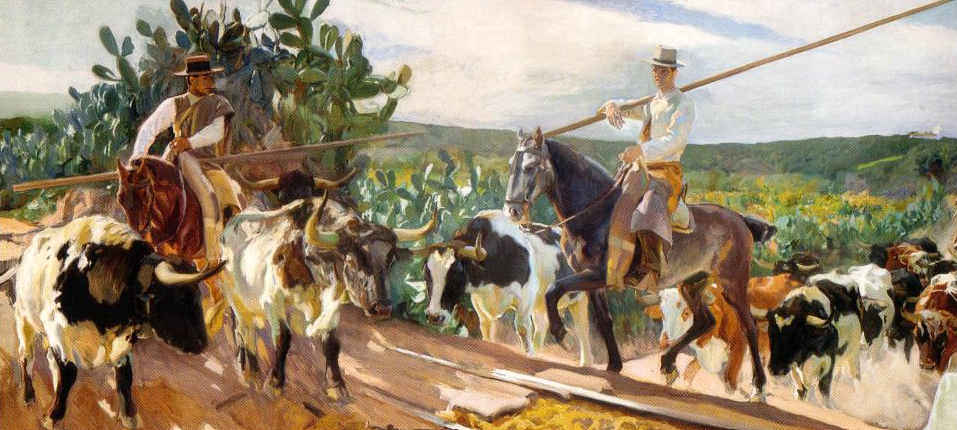
Archer Huntington seems to have been as enamored of Joaquin Sorolla’s work as I am — leaving an awesome legacy to delight Sorolla fans on the border between West Harlem and Washington Heights of NYC at The Hispanic Society of America.
In 1911 Huntington commissioned Joaquin Sorolla y Bastida (Valencia, Spain 1863 – Cercedilla, Spain,1923) to paint a series of scenes to celebrate the artist’s homeland. Although Huntington originally envisioned a narrative history of Spain, he indulged Sorolla’s desire to capture “the true spirit of Spain, that is, it’s people.” The magnificent cycle is now known as Vision of Spain, although Sorolla referred to it as The Provinces of Spain.
Sorolla was the most esteemed and internationally renowned Spanish painter of his time. The first major exhibition of his work in the US, held in 1909 at The Hispanic Society of America, was a triumph. That led Huntington, who founded the Hispanic Society, to commission him in 1911 to paint the Vision of Spain cycle for a permanent installation at the museum.
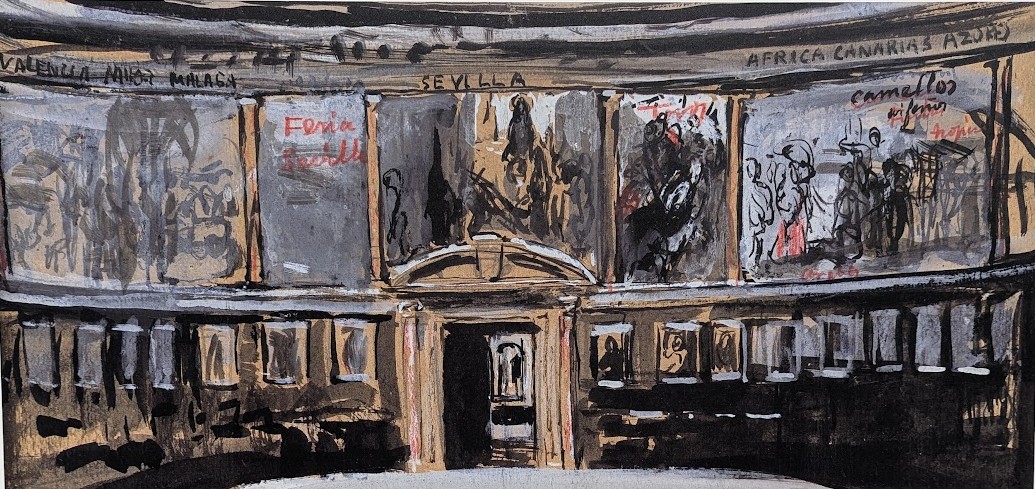
Sorolla spent the next eight years travelling the length and breadth of his country, documenting the essence of Spain and its people. He believed that to depict the diversity of Spanish customs with authenticity he needed the full immersion of first-hand experience. He trekked to remote rural villages, enduring harsh weather, primitive transport, and the most basic of accommodations.
As early as October 4th, 1912, he wrote to his wife: “I am at my wit’s end with this blessed decoration … I am too old to be running around like this. It is exhausting.”
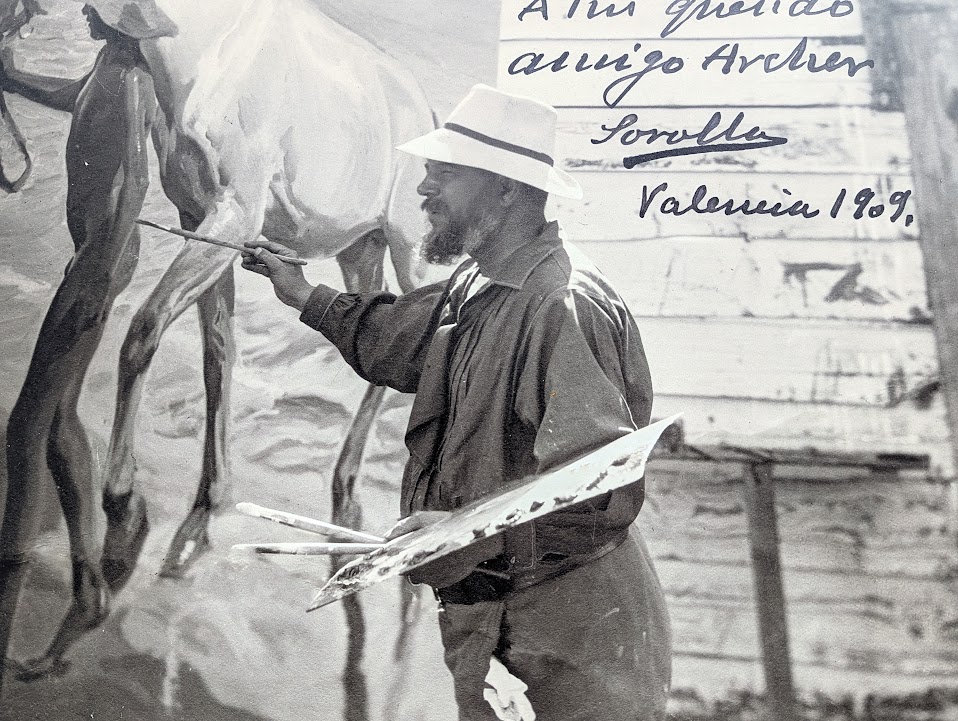
Sorolla painting en plein air 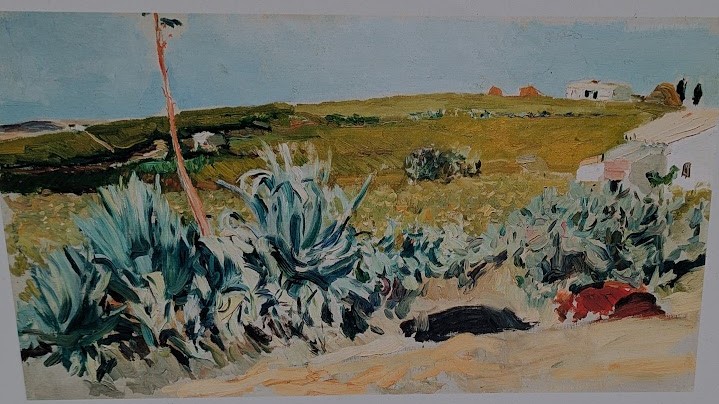
Piteras, 1914. Gouache 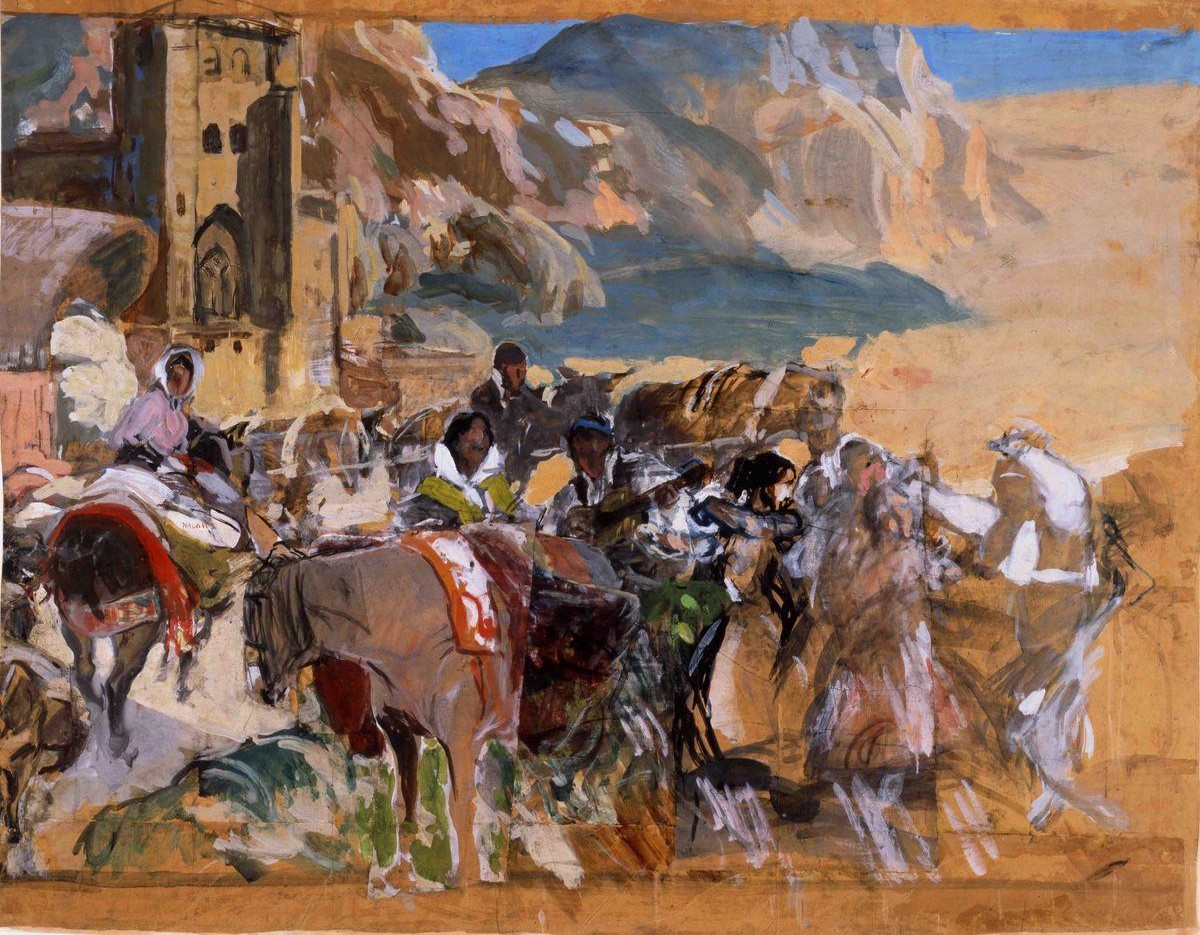
Study for Navarra & Aragon
Sorolla produced countless gouache studies in planning the final compositions but, somewhat amazingly, he painted the 14 magnificent panoramas primarily en plein air. Worked in oils on canvas, each scene measures almost 12 feet tall and they extend 200 feet in combined length. The canvases were shipped to New York in 1919, installed in a dedicated gallery and officially opened to the public in 1926.
“This is a work of truly grand scale and until I finish it, until I see it all as a whole and can compare certain canvases side-by-side with others, I myself don’t know what to think of it … And what if I have made a mistake?” This statement takes on real poignancy when one learns that Sorolla never saw his masterwork installed.
In June 1920, not long after completing the final scene of the Vision of Spain, while painting in his garden he suffered a debilitating stroke that left him paralyzed and unable to raise a brush. He died in 1923, at age 60, without having experienced the joy of seeing the extraordinary outcome of his eight grueling years of work arrayed around this monumental purpose-built room.
To stand at the center of this expansive gallery, slowly turning 360°, eyes wide open, is to experience art-awe of the highest order.
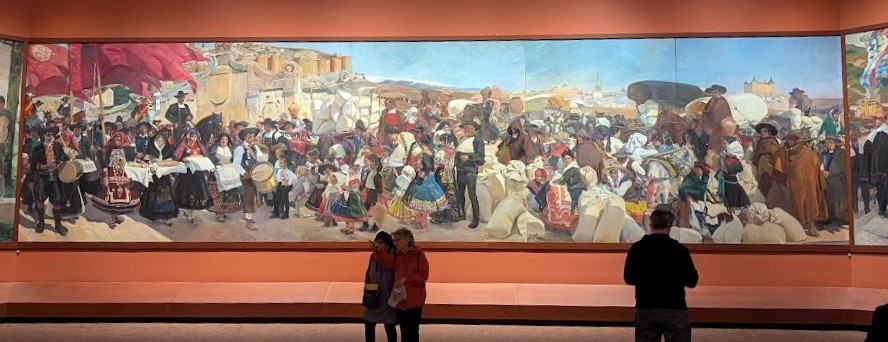
It was a colossal undertaking, with exuberant highs as well as moments of despair. In 1912, he enthused to Huntington, “In Lagartera, I have found the Toledo of old: what people, what outfits: it is a marvel!” But in a 1915 letter, he wrote: “Now that I am in the countryside working on a five-meter study with 27 figures to copy onto the Castilla panel later, the weather has become overcast and drab as snow. There is nothing sadder in this world than to passionately yearn for something, to have it in your sights and not be able to attain it. The work for this panel is quite hard […] Oh my dear friend! What a mess we have gotten ourselves into!”
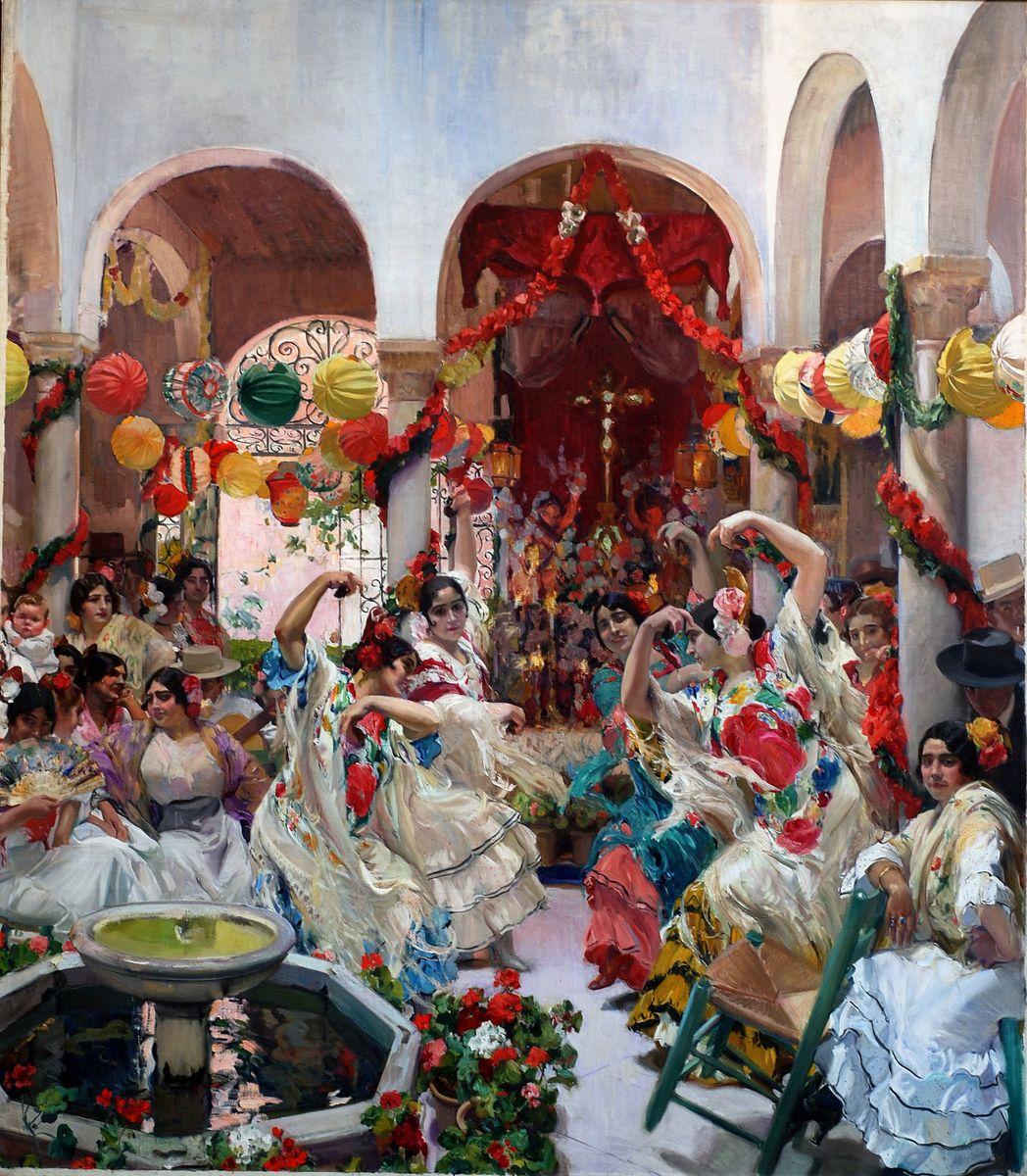
Sevilla: The Dance 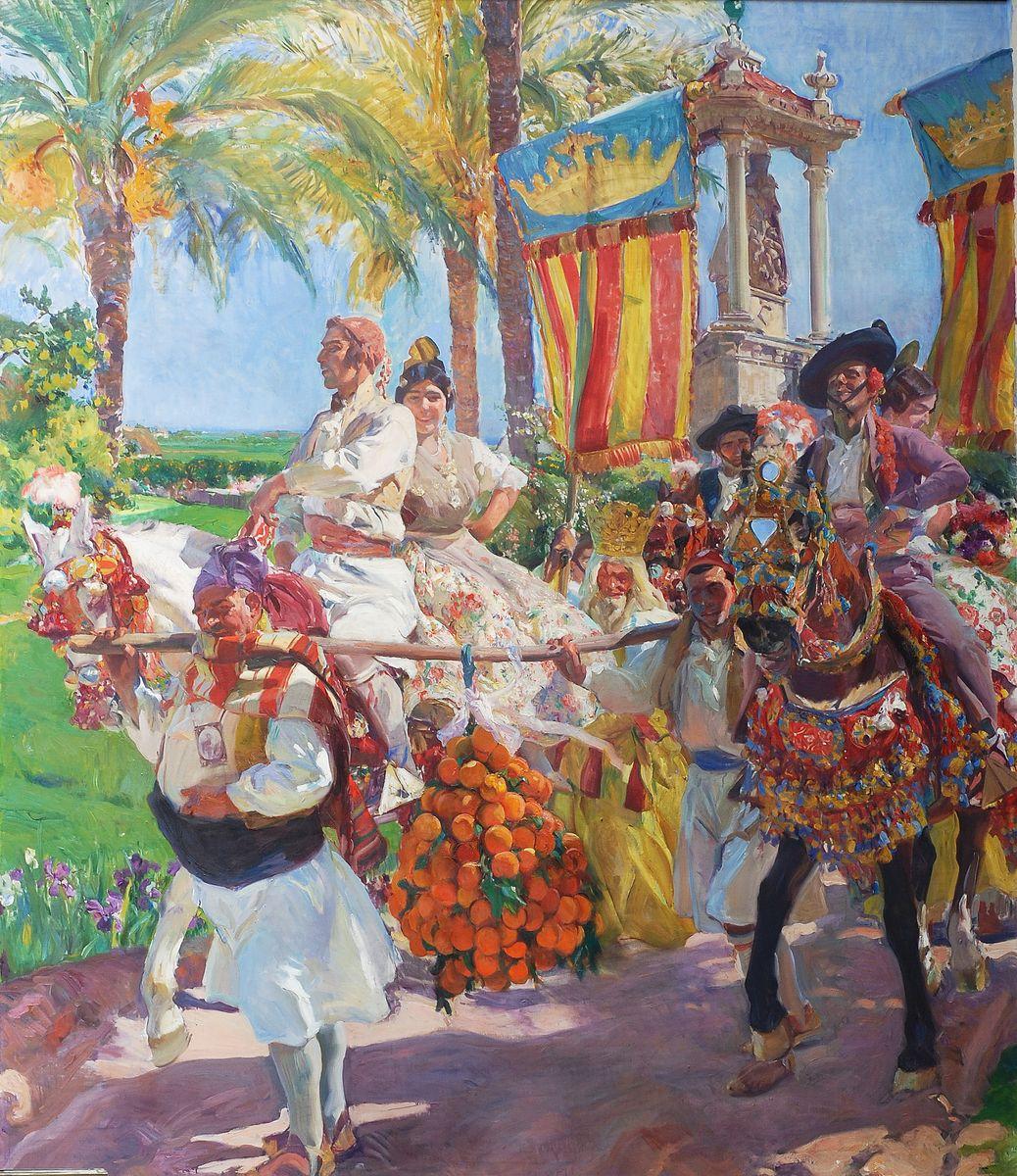
Valencia: Couples on Horseback
Of the Sevillanas dancing (Seville: The Dance, above) he wrote, “This is perhaps the most complicated thing I have ever done, and difficult in terms of light and colors, plus the movement. I have just finished today’s session and I am exhausted, but happy. As you can see, my life is intense and devoted to this great work, which I love more and more as it progresses.”
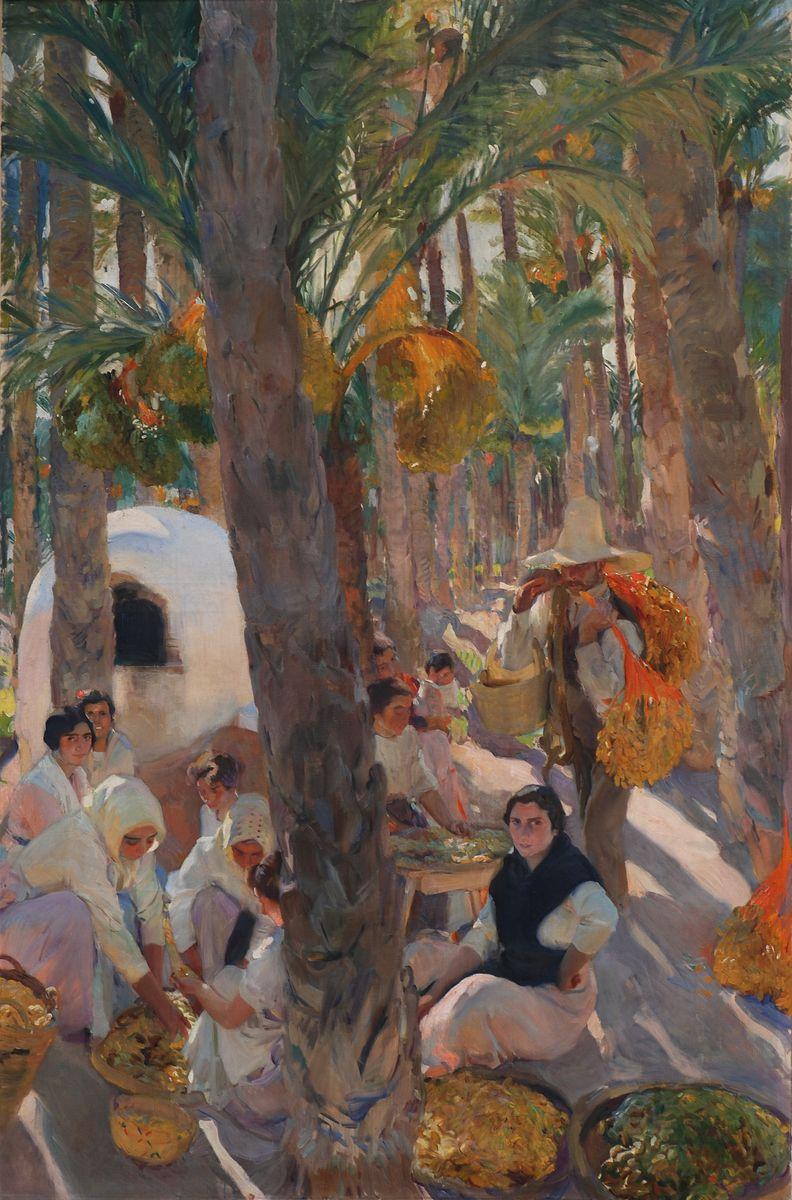
Elche: Palm Grove 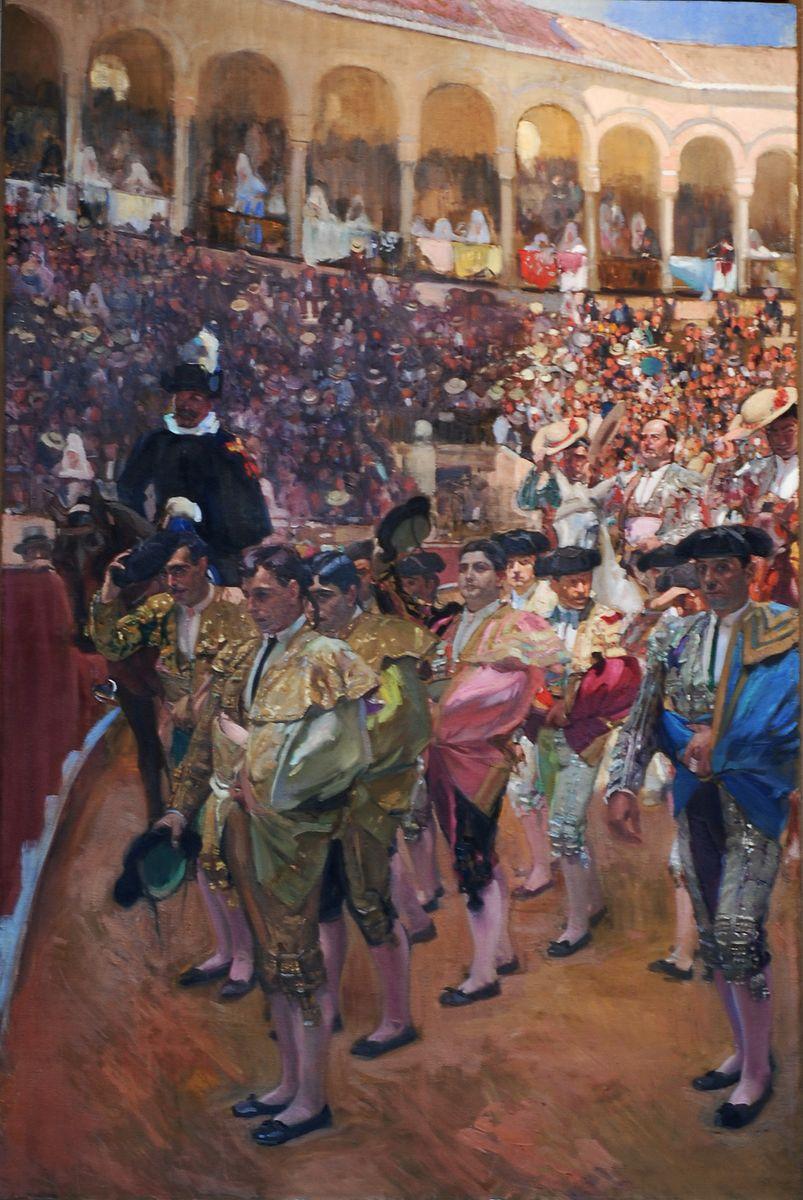
Sevilla: Corrida
Huntington encouraged Sorolla to include the palm groves of Elche (above). For him they were emblematic of the ties between Spain and North Africa, and of Spain’s position as a crossroads of civilization. Other than that one panel, though, it seems that Sorolla had an entirely free hand in deciding which scenes to paint.
Sorolla often made changes to the plan as he worked, but his patron was remarkably patient and accepting. More than once he had settled on a scene and begun to paint, only to change gears to focus on something else. This was the case with Sevilla: Corrida (above). He started painting the action of the bullring but, perhaps realizing that it might be too vivid a portrayal of blood and violence, he started over, highlighting instead the unique and colorful costumes of the bullfighters. The oxen in Andalucia: The Round-Up (top image), he felt, were less dangerous and more appealing than fighting bulls.
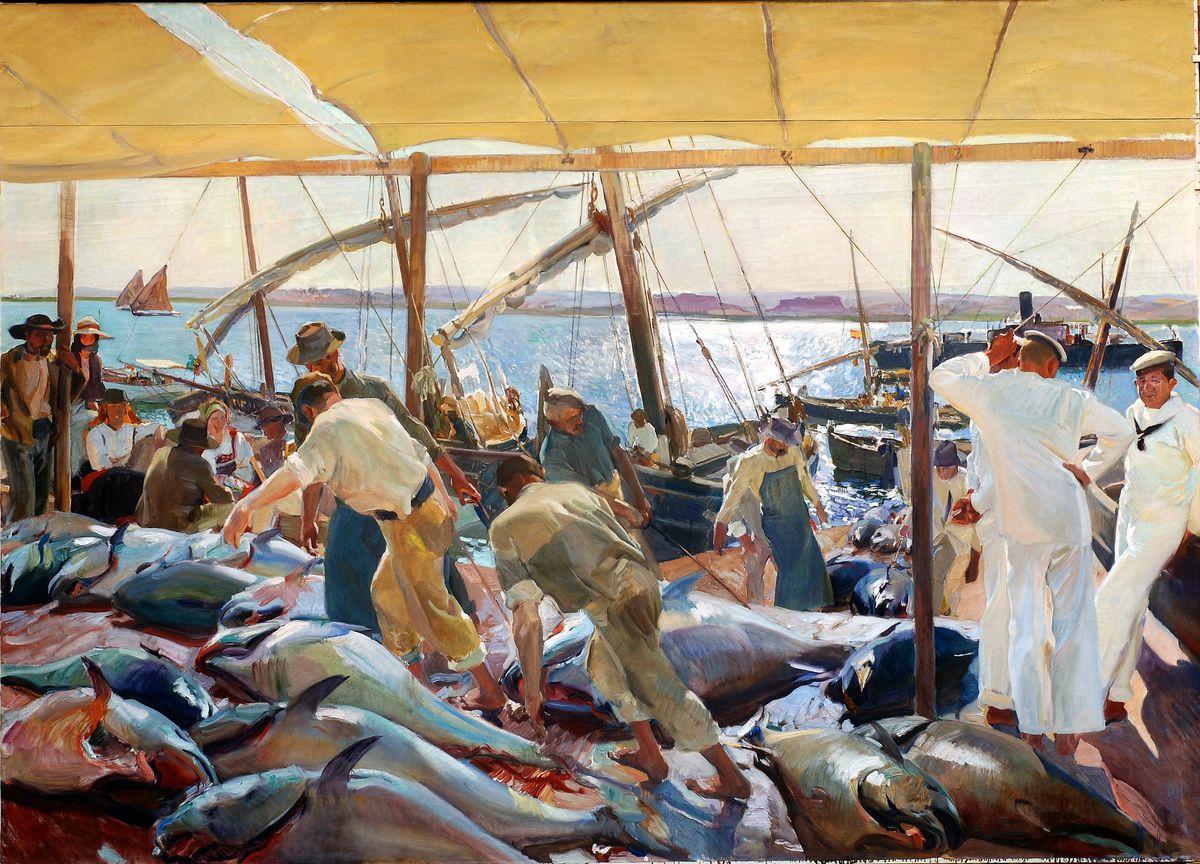
Ayamonte: The Tuna Catch 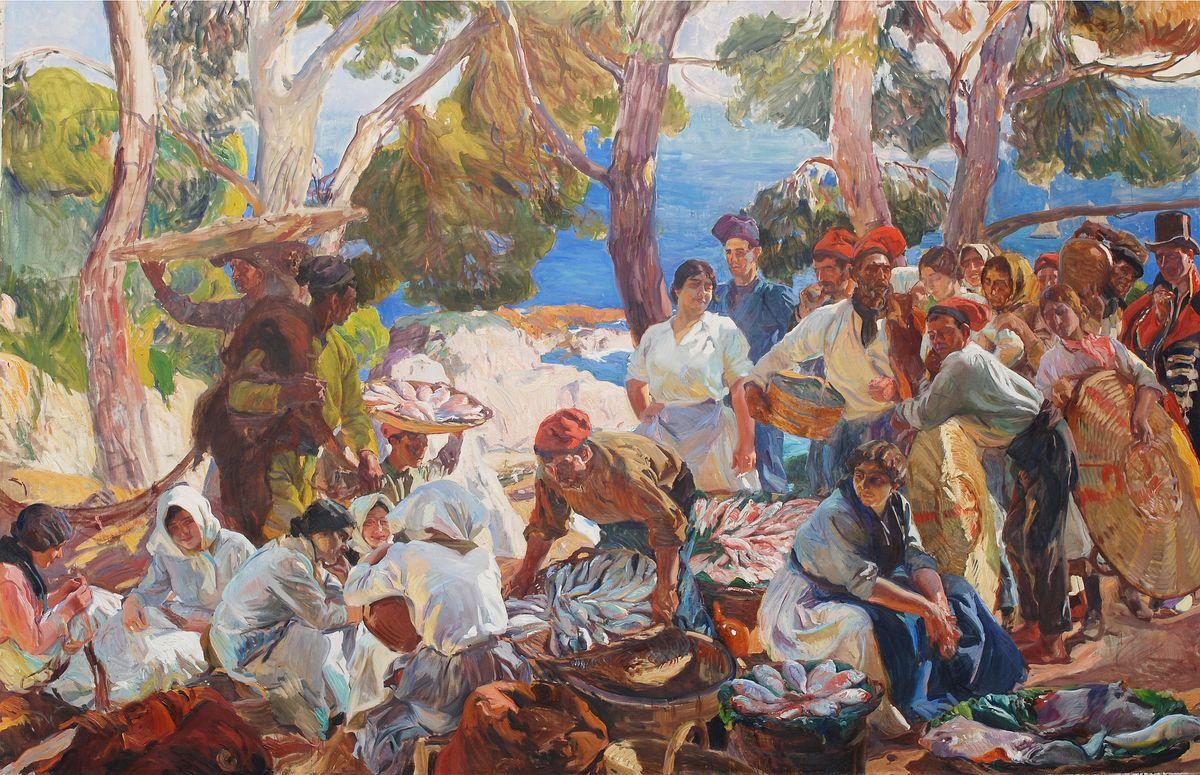
Catalunya: The Fish Market
In a 1915 interview, Sorolla explained his intention this way: “I wanted to set down the truth of the psychology of each region, of course, without resorting to symbolism or literature. I want to give a true representation of Spain, in accordance with my realist approach, naturally, not aiming for a philosophy, but simply the visual attraction of each region.”
He also spoke of his sadness that — on one hand — Spain was not progressing apace with the rest of Europe, and — on the other hand — he said “it is a sorrow that the picturesque in Spain is on the verge of disappearing.”
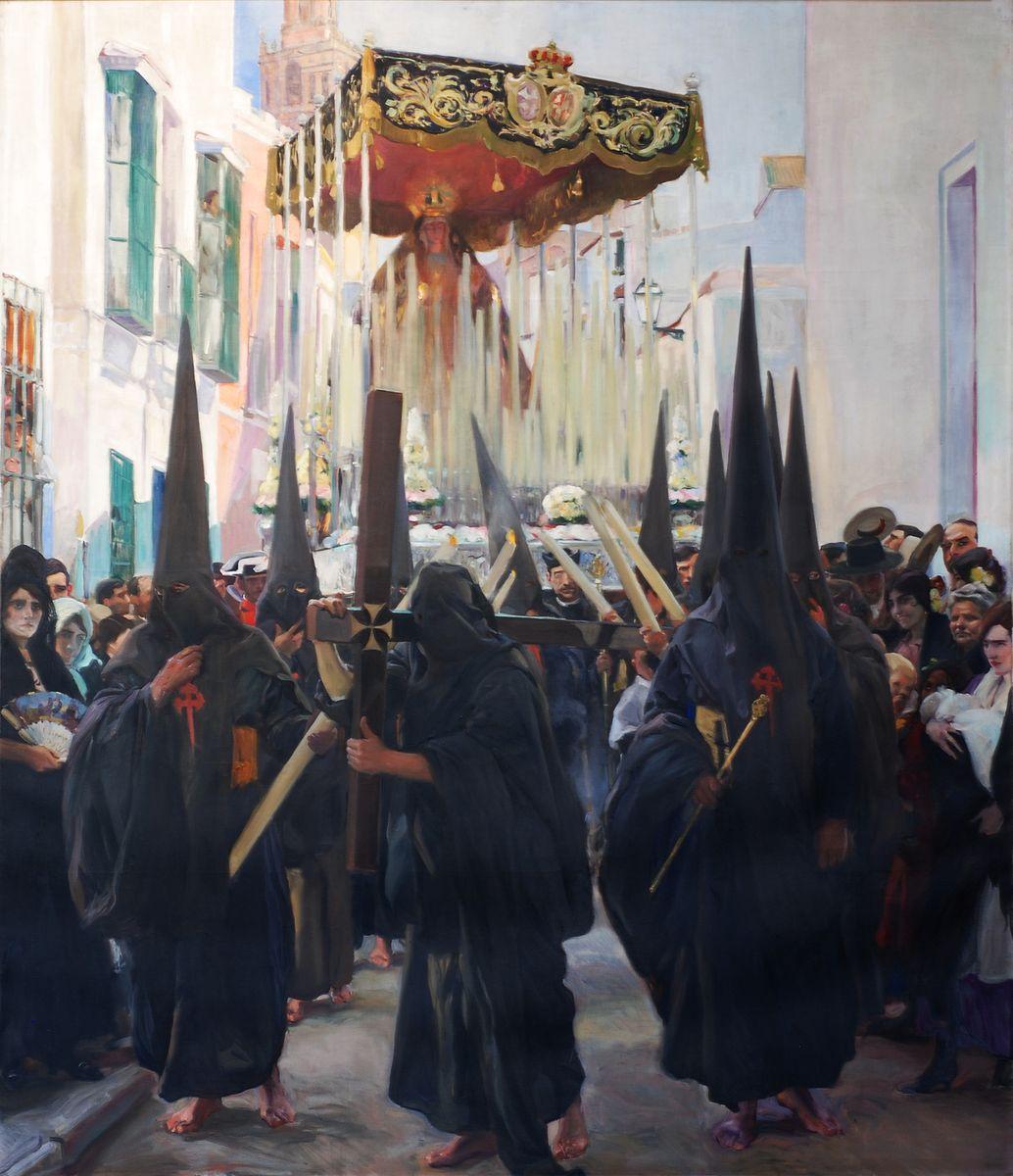
Seville: Holy Week Penitents 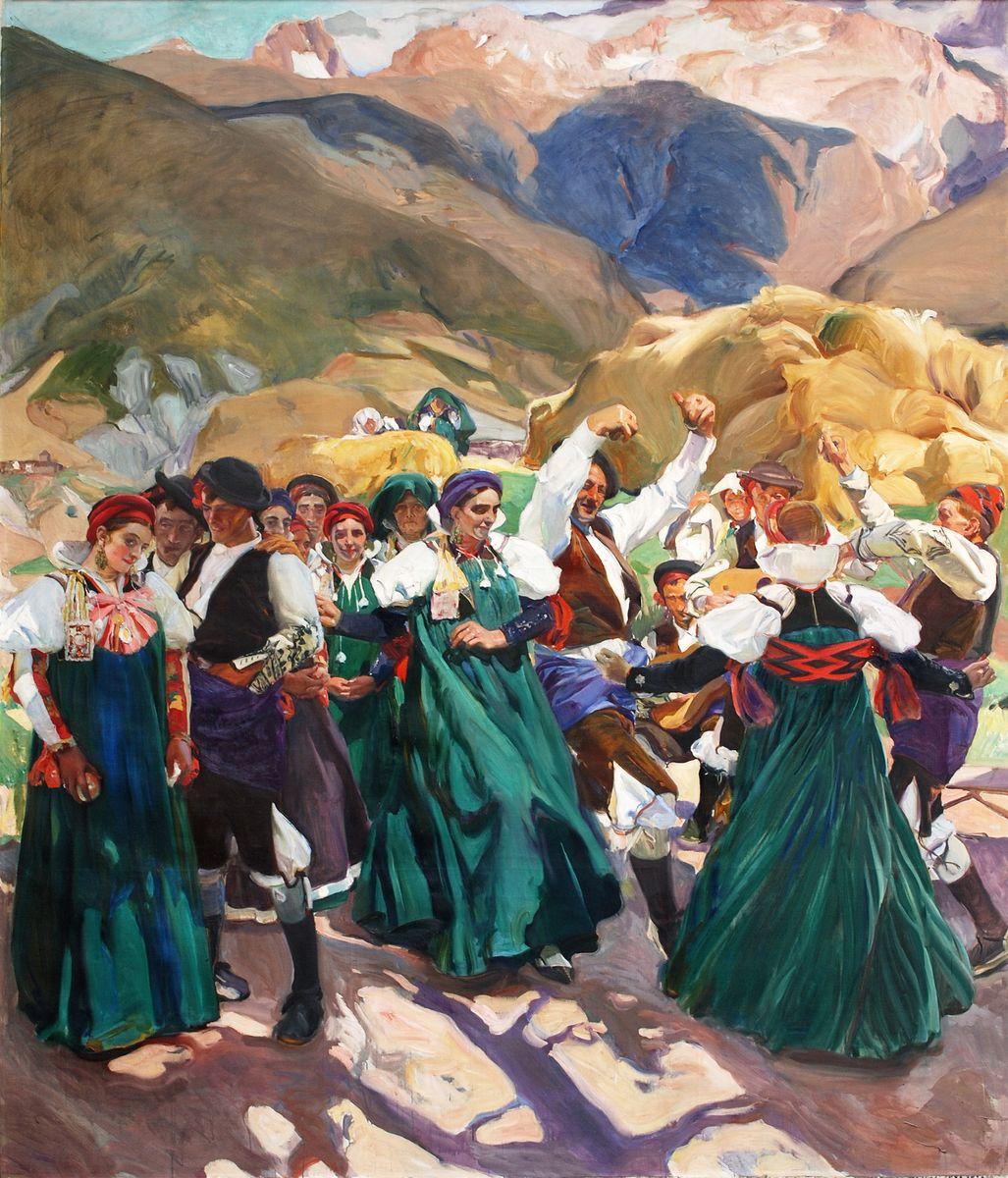
Aragon: The Jota
Sorolla’s Vision of Spain narrative cycle is on permanent display at the Hispanic Society of America. It is a jaw-dropping swirl of brilliant color, a visual ode to his beloved homeland. It captures and preserves the diversity of early 20th century Spanish customs, costumes and ways of life, ensuring that at least the memory of this cultural history will never disappear. Joaquin Sorolla y Bastida did indeed capture “the true spirit of Spain, that is, it’s people.”
Hispanic Society of America
613 W 155th St, New York, NY
Situated north of the upper reaches of the Upper West side, the Hispanic Society is easily accessible by subway, taking the Red Line #1 train to the 157th St. stop.
Cover image: Andalucia: The Round Up (1914), Joaquin Sorolla y Bastida. Collection of the Hispanic Society of America, New York
Unless otherwise noted, all images are © Hispanic Society of America, New York.
Art Things Considered is an art and travel blog for art geeks, brought to you by ArtGeek.art — the only search engine that makes it easy to discover more than 1300 art museums, historic houses & artist studios, and sculpture & botanical gardens across the US.
Just enter the name of a city or state to see a complete catalog of museums in the area. All in one place: descriptions, locations and links.
Use ArtGeek to plan trips, to discover hidden gem museums, and to find temporary art exhibitions that have special appeal to you — — wherever you are or wherever you go in the US. It’s free, it’s easy to use, and it’s fun!